

The wide application of plastic wood in green buildings is a trend of recycling waste wood fiber and waste plastic. It reflects my country's concept of advocating "circular economy" and building a "conservation-oriented society". Its development and application help reduce the "white pollution" of plastics, which is beneficial to the protection of forest resources, and is of great significance to the comprehensive utilization of waste, environmental protection and relieving the increasingly tense pressure on wood. The application of plastic wood in green buildings, including building formwork, flooring, wall panels and furniture, has certain practical significance for promoting the application of plastic wood in green buildings.
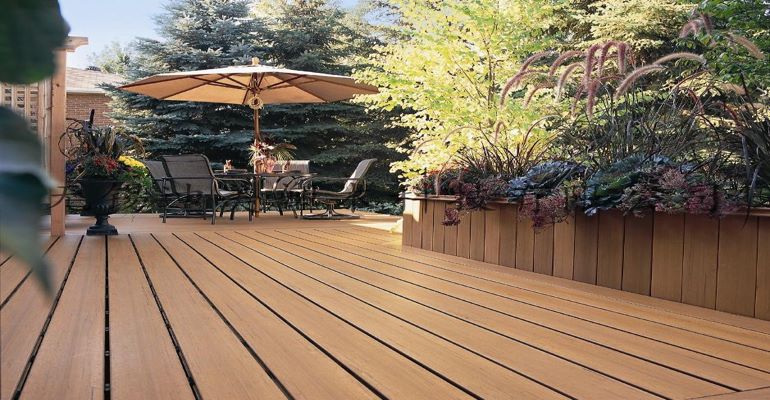
Plastic wood building formwork
Plastic wood building formwork can alleviate the current situation of shortage of resources such as wood and steel, and is in line with the sustainable development strategy; Plastic wood building formwork has high strength and good dimensional stability, and can maintain a flat surface after multiple uses; Plastic wood building formwork has good processing performance and is easy to fix; Most importantly, the plastic wood building formwork has a high number of recycling times, up to 20~30 times, which greatly reduces the cost, and the discarded plastic wood building formwork can be recycled, which is an environmentally friendly new building formwork. Although plastic wood building formwork has many advantages, it is not perfect enough. In order to meet the needs of the industry, it is necessary to further improve the stiffness, strength, toughness of plastic wood building formwork and optimize the structure of plastic wood building formwork. Studies have shown that adding SiO2, calcium carbonate, etc. can significantly improve the rigidity of plastic wood. In the preparation process of plastic wood building formwork, toughening agents are usually added to improve the toughness of plastic wood. Fiber filling not only improves the rigidity of plastic wood, but also improves the toughness. There are also studies on adding rice husks to prepare plastic wood building formwork. Since the shell structure has better comprehensive performance than other structures, the shell structure is usually used to prepare plastic wood building formwork.
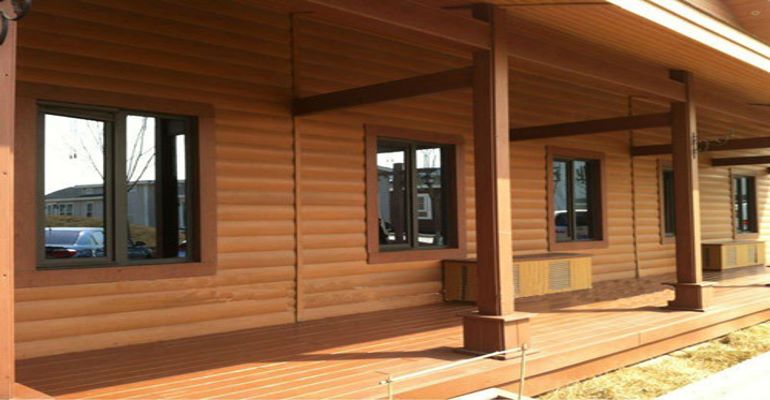
Plastic wood flooring
Plastic wood flooring has the properties and characteristics of both wood and plastic. It is a new type of environmentally friendly high-tech material that replaces wood and plastic. It is a widely used plastic wood in green buildings. The national standard GB/T24508-2009 "Plastic Wood Flooring" defines plastic wood flooring as: a floor made of fiber materials such as wood and thermoplastic plastics, which are made into processing units respectively, mixed in a certain proportion, and then processed by molding. Plastic wood flooring was studied and produced earlier abroad, but due to the limitations of production processes and production technologies, it has not been well promoted. At present, my country's innovative research on plastic wood flooring mainly focuses on functional designs such as flame retardancy, aging resistance, quietness, wear resistance, lightweight, waterproof, anti-static and removable, as well as surface decoration such as surface relief, double-sided texture, paint layer and surface covered with solid wood layer. With the development of the economy and society, people's requirements for floor texture are getting higher and higher. Many plastic wood floorings with imitation precious wood color design textures and other brightly colored textures have appeared one after another, promoting the development and application of plastic wood flooring. Although the research and application of plastic wood flooring in my country is still in its infancy, due to the strong support of the state and local governments, the development prospects are very broad.
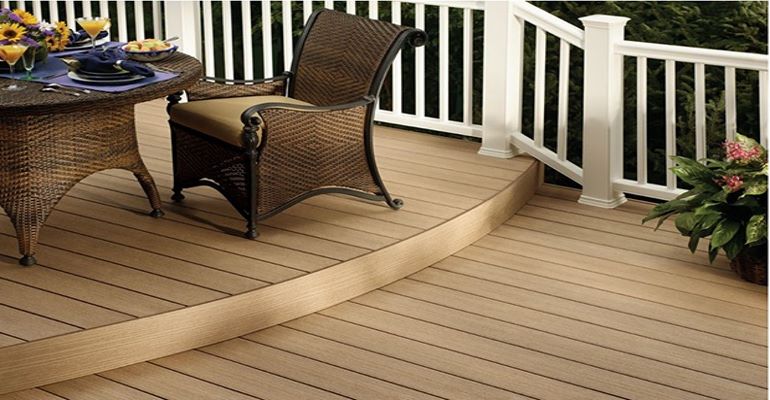
Plastic wood wallboard
Plastic wood wallboard is another plastic wood product widely used in green buildings. After plastic wood replaces wood, it can not only improve the durability of house buildings, but also make house buildings easy to maintain and repair. At the same time, plastic wood also shows more artistic value and aesthetic value than wood, which significantly improves the use value of house buildings. Therefore, plastic wood is widely used as wallboard material in foreign buildings. In recent years, plastic wood wallboard has achieved unprecedented development in my country, and its usage has increased geometrically year by year, occupying most of the market share of plastic wood market. With the requirements of vigorously developing low-carbon economy and green buildings in my country, it is urgent to research and develop functional plastic wood wallboards such as flame retardant, fireproof, heat preservation, and formaldehyde-free. A method for preparing fireproof and formaldehyde-free plastic wood wallboard, which is mainly prepared by adding raw materials such as polyvinyl chloride (PVC), plant powder, calcium carbonate powder, polyaniline, adhesive, potassium ethyl benzoate, methyl methacrylate adhesive, etc. Plastic wood wallboard was applied relatively late as a green building material, but it has gradually developed with the progress of society. It is expected that plastic wood wallboard will become the new favorite of green building wallboard decorative materials in the future.
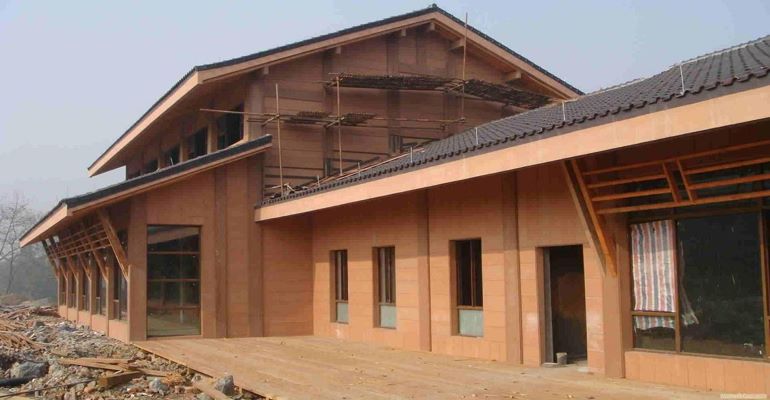
Plastic wood furniture
In recent years, the development of plastic wood furniture has mainly focused on the design, appearance color and overall structure. Researchers in the field of green building furniture have mainly focused on the surface performance, antibacterial performance and flame retardant and smoke suppression performance of plastic wood. The surface performance of plastic wood furniture includes light texture, color, texture, gloss, touch, etc. Studies have shown that the use of silicone and acrylic polyurethane coatings to coat the surface of plastic wood, veneer plastic wood composite materials with veneer, and the development of plastic wood imitating precious wood texture can obtain plastic wood with the natural texture and texture of solid wood, thereby improving the feasibility of plastic wood in the field of green building furniture. Because people are in close contact with furniture, plastic wood furniture needs to have antibacterial properties. Methods for improving the antibacterial function of plastic wood include grafting high molecular monomers with antibacterial functions on the surface of plastic wood, adding antibacterial agents when preparing plastic wood, etc. Plastic wood is made of wood materials and plastics as the main raw materials. It is a flammable material, and the smoke generated during combustion is an important cause of casualties. Therefore, plastic wood must be functionalized with flame retardant and smoke suppression. According to literature reports, flame retardants such as ammonium polyphosphate, intumescent flame retardant, and aluminum hypophosphite can achieve good flame retardant and smoke suppression functions of plastic wood. Although the application of plastic wood in the field of green building furniture has just started, the development trend is very rapid. With the rapid development of social economy, the development of multifunctional plastic wood furniture has become an inevitable trend.
With the rapid development of science and technology, the use of natural plant fiber reinforced plastics with abundant resources is an important research direction for the sustained growth of polymer-based composite materials. The "13th Five-Year Plan" development plan for the national new materials industry points out that advanced polymer materials and high-performance resin-based composite materials have become one of the key support directions. Plastic wood has attracted much attention as a new type of composite material with friendly characteristics such as low carbon, green, environmental protection, and sustainable development. In the future, plastic wood technology should be combined with modern high technologies such as nanotechnology and biotechnology. With the development of the Internet era, it will develop in the direction of multifunctionality (i.e. flame retardant, antibacterial, sound absorption, etc.), lightweight, environmentally friendly, intelligent and customizable. Plastic wood will surely become a material with great application prospects, greatly driving the industry upgrade in the field of green buildings.


